
Please note that the the footpath and hide at Saltmarsh Delphe are temporarily closed for visitor safety. Access to Willow Garth remains open.
We plan to start work on a new footpath after the breeding season and are planning a new viewing area onto the Delph.

Saltmarshe Delph Nature Reserve
Location
OS Map Reference
SE 775 248View on What3Words

Know before you go
Dogs
When to visit
Opening times
Open at all timesBest time to visit
May to September, November to FebruaryAbout the reserve
Saltmarshe Delph is split into two sections by the Hull to Doncaster railway line: the Delph to the east and Willow Garth to the west.
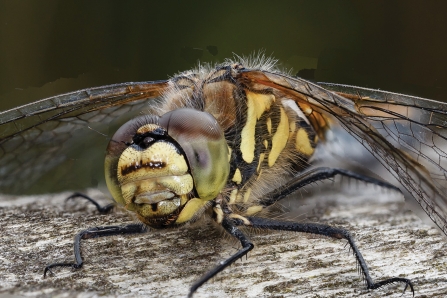
At the height of summer, this is an outstanding place to see dragonflies and damselflies, with 19 species recorded. There are other interesting insects to find, including the lesser stag beetle and ringed China-mark moth. Where there's rich insect life, there are other creatures that feed on them, and here those include the Daubenton's bats that skim low over the lake.
Areas of open water and reedbeds contain lesser reedmace, while mature willow, oak and ash grow in the woodland fringe. The area of wet willow carr in the north-east corner is full of birdsong in spring.
Warblers, wildfowl and ducks galore
This mix of habitats is ideal for a number of birds, from raptors like the marsh harrier and hobby to warblers including reed and sedge warbler, blackcap and chiffchaff.
Some of the other birds to keep and eye out for include cuckoo, sand martin and kingfisher, while in winter, hundreds of ducks return to the water, including gadwall, teal and shoveler. You can watch the birds from an old hide, built on stilts. Another way to enjoy the wildlife us to just sit patiently in the woods and let it come to you.
Accessibility and facilities
There is a very old hide built on stilts with steps and benches inside but is sadly not accessible for visitors with disabilities. There are no wheelchair viewing spaces.
The nearest public toilets are at a garden centre in the nearby town of Howden where you will also find other shops and amenities .
The reserve has a good mobile signal.
History
The Delph was excavated in 1864 to provide spoil for the approach to the railway bridge close by. The Willow Garth to the west of the railway was commercially worked until 1956, providing materials to make agricultural baskets. In 1972 the site become a nature reserve. Yorkshire Wildlife Trust works to keep the ponds and reedbeds in their present condition and to control willow encroachment.
Directions
Public transport
The nearest train stations is at Saltmarshe, which is 2.1 miles from the nature reserve. A Trans-Pennine footpath passes the site.
By car
The nature reserve is 2.5 miles south east of Howden. Turn off the A614 roundabout signed Kilpin and Laxton. Take the Skelton road and proceed through the village, then turn left away from the River Ouse before the railway swing bridge. The nature reserve is 400m along the road to Saltmarshe.
Seasonal highlights
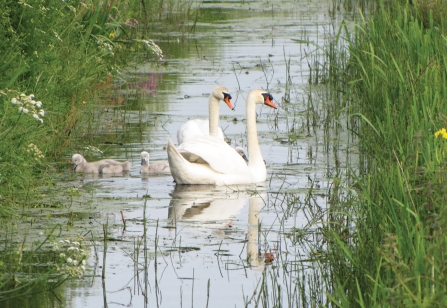
- Spring: Birds - Mute swan; Marsh harrier; Cuckoo; Sand martin; Sedge warbler
- Summer: Invertebrates - Emperor dragonfly; Small red-eyed damselfly; Broad-bodied chaser; Southern hawker; Birds - Hobby
- Autumn: Birds - Teal; Wigeon; Gadwell; Invertebrates - Ruddy darter
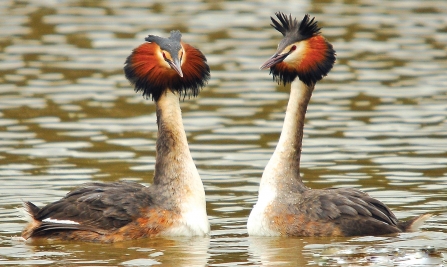
- Winter: Birds - Great crested grebe; Willow tit; Water rail
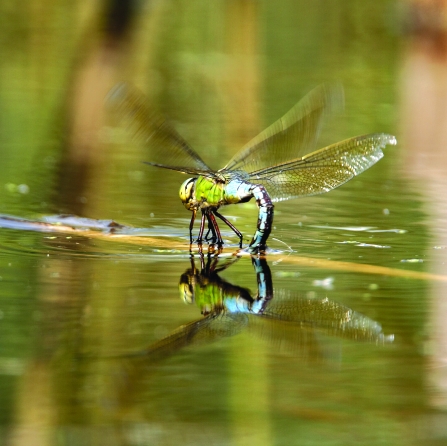
Emperor dragonfly - Les Gibbon

Water rail (C) David Swann
Magic Wildlife Moment
Spotting an elusive water rail stepping out from the reedbed.

The autumn colours were even more beautiful when the sun came out
Photo Credit - Telling our Story Volunteer, Sara


