

© David Parkyn
Beavers in the wild
Returning beavers to Yorkshire
Yorkshire Wildlife Trust is working with partners to develop a beaver reintroduction programme, which aims to return sustainable beaver populations to appropriate river catchment areas in Yorkshire.
The programme will use data and evidence to identify suitable beaver habitat, work with local landowners, release beavers in appropriate locations, and manage beaver populations over time.
Project 1: Beavers on the River Derwent
Forestry England with support from Yorkshire Wildlife Trust and North York Moors National Park Authority are developing a Wild Release Licence Application for the Yorkshire Derwent Catchment in North and East Yorkshire. This follows the successful Yorkshire Enclosured Beaver Trial at Cropton Forest led by Forestry England.
The wild release of beavers requires a licence from Natural England. To secure a Wild Release Licence an evidence-led project plan must be developed with local stakeholders to ensure wild living beavers can be released and managed successfully within the catchment in the years ahead.
This project is ongoing. For more information, please contact the Beaver Project Team at Yorkshire Wildlife Trust at beavers@ywt.org.uk

David Parkyn - David Parkyn/ Cornwall Wildlife Trust
Frequently asked questions
Why beavers?
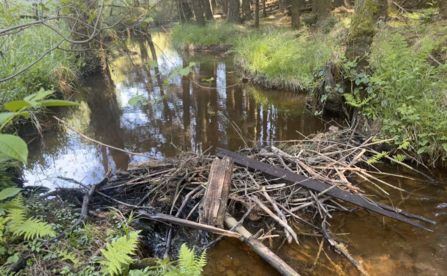
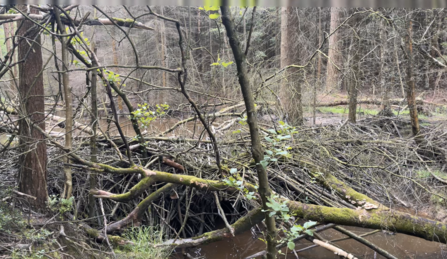
Beavers play an important role in the health of our wetland ecosystems. By instinctively creating small pools and dams, they help to make resilient wetlands that act as flood relief and benefit a wide range of species including amphibians, fish and bats. Multiple trials have demonstrated that the presence of beavers improves biodiversity and water quality, and reduces flooding and river sediment.
Wetlands are some of the biodiverse habitats on the planet, and restoring these is crucial to improving biodiversity. Beavers don’t just benefit rivers – they also create habitats like wet meadows and wet woodland which we are sorely lacking.
Through evidence-led research we know there are suitable areas for beavers to return to in Yorkshire, where they can secure these benefits for people and wildlife once more.
What benefits can beavers have?
- Beavers can help to store more water in the upper reaches of the catchment area, helping with flood alleviation during periods of high rainfall.
- Beavers also help in dry periods and times of drought, where they store water within rivers and the wider water table, benefiting the farmed landscape.
- Beavers can improve water quality by trapping sediment and pollutants in beaver-made wetlands, providing cleaner water in our rivers.
- Beavers are ecosystem engineers, creating dynamic and diverse habitats which benefits a wide-range of species and deliver high biodiversity outcomes.
What impacts do beavers have on the landscape?
Beavers significantly modify landscapes, making some areas wetter and felling trees.
They do not like to move far from water, and the majority of their activities take place in the riparian zone (i.e. the area running adjacent to a river or stream). Most foraging activity occurs within 20-40m of the water’s edge with beavers rarely moving more than 60m from water to forage.
Beaver activities can sometimes result in conflicts with humans. Such conflicts predominantly result from beavers damming watercourses, burrowing into the banks of water bodies and foraging for food including felling trees.
How do beavers reduce flooding and drought?
Beaver dams in river headwaters hold water and release it slowly, making rivers downstream less prone to flash flooding and allowing the trickle through of water in drought. However, in some lowland and agricultural areas where there is risk of unwanted flooding or damage to culverts and drainage systems, active beaver management tools may be required to ensure the right balance between beaver activities and community needs. We will always choose the location of beaver reintroductions carefully in collaboration with local landowners, and there are strategies and plans in place to deal with unwanted beaver presence.
How far from water do beavers cut trees?
Most trees that beavers cut down are within 30 metres of a watercourse, as beavers do not like travelling over land. They may occasionally raise the height of a dam to bring the water to a food source, or create canals from the pond in the direction they want to forage.
Beavers tend to cut down the most vegetation when they first arrive in a new habitat to create shelters and dams, which may look alarming. Most of this is coppicing from which the trees will easily regrow.
They also cut down a few more trees in late autumn to help them stockpile a food cache for the winter, as they do not hibernate.
What do beavers eat?
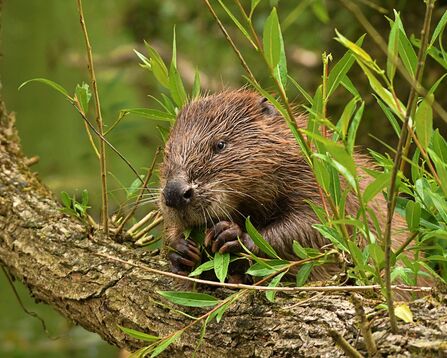
In summer, beavers graze mostly on riverside plants and grasses. In winter they feed mostly on tree bark and shoots.
Beavers coppice trees to create dams, and this is sometimes perceived as eating. They mostly fell trees like willow and aspen, although they also like poplar and apple. These naturally re-sprout when cut – just like when humans coppice. Beavers also tend not to move far from fresh water, so impacts are usually close to the riverbank.
In some cases additional browsing by deer and livestock or flooding will prevent coppiced trees from re-growing. Special trees can easily be protected from beaver activity using wire netting or a mixture of latex paint and sand.
Beavers are entirely vegetarian and don’t eat fish. The natural wetland habitats they create often help to increase fish populations, and their dams have little impact on fish migration compared to man-made obstructions.
Are beavers native to the UK and Yorkshire?
Yes, Eurasian beavers are a native species to Britain! There is archaeological and historic evidence that they lived in Yorkshire – in fact, it is thought the last beaver killed in Britain was killed at Bolton Percy just outside York in 1789. Beavers were hunted to extinction for their fur, meat and castoreum.
How should we behave around beavers?
Please be as quiet as possible and behave unobstrusively. Keep dogs on leads, keep your distance and view any beavers you do spot through binoculars. Beavers are a protected species in the UK and it is an offence to disturb, hurt or destroy them or their breeding sites.
Please respect landowners with beavers on their land by sticking to public footpaths, following the Countryside Code, and avoiding trespassing.
Managing the impacts of beavers
We understand that some local landowners and stakeholders might have concerns about the reintroduction of beavers to their local area. As wild beavers are now present in catchments across the UK, more information on living alongside beavers is available here.
It is sometimes necessary to manage beavers and how they affect the landscape. The government has outlined a 5-step approach to beaver management which must be followed:
1. Engaging with beaver management groups, Natural England and other expert organisations to learn about the potential benefits of beavers and approaches to manage or minimise challenges.
2. Making space for beavers to avoid the need for further actions, such as leaving space around a waterway for beavers to use.
3. Taking proactive lawful actions that do not need a licence, such as installing tree guards to protect trees or removing a dam that is less than two weeks old.
4. Lower-impact licensed action such as reducing dam height or removing an established dam outside the breeding season.
5. Higher impact licensed actions that only a specifically trained and licensed person can carry out, such as modifying dams or relocating populations.

Further information and advice on wild living beavers
Yorkshire Wildlife Trust can offer advice and guidance regarding wild living beavers and appropriate management approaches.
For enquiries and advice about beavers please contact our Beaver Project Team at Yorkshire Wildlife Trust: beavers@ywt.org.uk
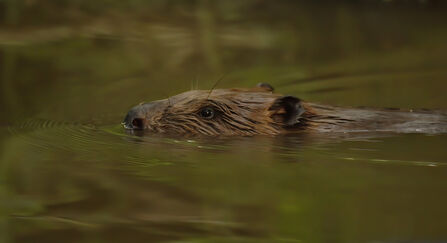
Beaver swimming with its head just above the water © Russell Savory
Sam Alexander Photography