
Lapwing on Walshaw Moor © Jack Wallington
Calderdale Energy Park
England's largest windfarm proposed on Walshaw Moor, in Calderdale.
A page for news, updates and action as the planning process progresses
A wind farm at this scale represents a Nationally Signficant Infrastructure Project and is proposed on an incredibly sensitive and protected landscape.
Walshaw Moor has formal and legal protections for its irreplaceable blanket bog habitat and the rare and threatened species like merlin and golden plover that call this rich and ancient peatland home.
It is part of the South Pennine Moors Special Area of Conservation, South Pennine Moors Phase 2 Special Protection Area, and South Pennine Moors Site of Special Scientific Interest, which supports habitats and species of both international and national importance.
Areas of Walshaw Moor have peat that is three metres deep, locking up carbon taken in by plants up to 6,000 years ago. The peat mitigates climate change and flood risk preserving millennia of human and environmental history as well as being home to amazing wildlife.

Clough on Walshaw Moor © Jack Wallington
Yorkshire Wildlife Trust’s view on Calderdale Energy Park
We are very concerned about this development and will continue to respond to the consultations through the formal channels.
Most of Yorkshire's uplands are protected for nature and their beauty, and any development on deep peat and within designated sites sets an alarming precedent.
On 8th April Calderdale Wind Farm Limited opened the most recent round of consultation - the Preliminary Environmental Information Report (PEIR) and Yorkshire Wildlife Trust submitted its response.
Yorkshire Wildlife Trust maintains a strong objection to the principle of the proposed development on Walshaw Moor. We believe,and our evidence shows that the proposals are poorly thought through.

Sphagnum denticulatum © Dom Hinchley
The PEIR - we object to the principle of the proposed development
- The development is inappropriate because of where it is proposed: blanket bog is an irreplaceable habitat in the National Planning Policy Framework – and there is no evidence the applicant has ruled out other locations as policy requires.
- The development is inappropriate because of where it is proposed: a protected site with key species - designated for merlin and golden plover and a breeding assemblage including curlew, dunlin, lapwing, snipe, and short-eared owl.
- Flood risk: the applicant has not yet proven that the development would not worsen flood risks in the settlements below.
- Other sites would better support net zero targets.
The PEIR and supporting evidence are also incomplete or inadequate. Our previous response highlighted missing or insufficient survey work, inadequate treatment of cumulative impacts, and questionable methodologies for hydrology and peat assessment; the same can be said for the PEIR.
This is precedent setting for future development on peatland.

Wind turbines on moorland in the South Pennines © Lyndon Marquis
Yorkshire Wildlife Trust and renewable energy
Yorkshire Wildlife Trust supports the government’s target to reach net zero, recognising that climate change not only threatens biodiversity but poses much wider environmental, social and economic risks.
We understand that transitioning to renewable energy is a critical part of this effort and fully support the move toward cleaner energy generation. However, it is essential that this transition does not result in avoidable, severe or long term harm to nature, and therefore individual renewable energy projects are located, designed and managed to minimise impacts on nature, protect important habitats and species, and contribute positively to nature’s recovery across Yorkshire.
Yorkshire Wildlife Trust engage positively with the development of renewable energy to ensure a positive outcomes for nature. Our involvement in specific cases has already reduced impact on habitats and larger compensation areas for wildlife incorporated into the design, or acquired through funding.
We are always keen to engage with developers for renewable energy schemes, as we acknowledge the urgent threat posed by climate change and support the UK’s goal of achieving net zero carbon emissions by 2050.
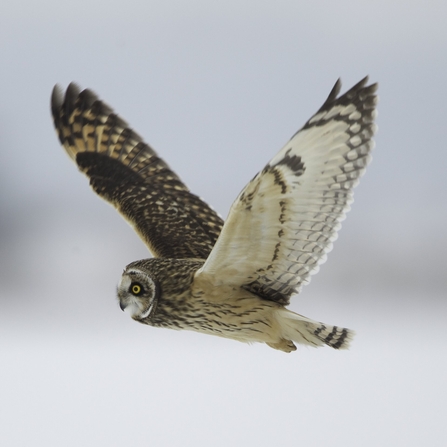
Short-eared owl © Danny Green/2020VISION
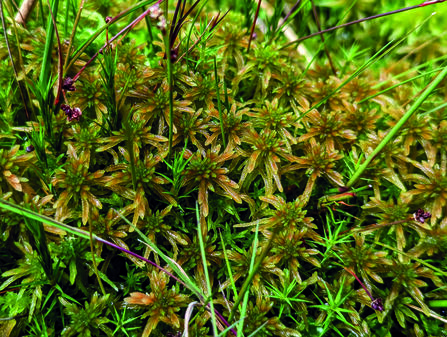
Sphagnum fallax © Libby Firby Fisk

Great crested newt
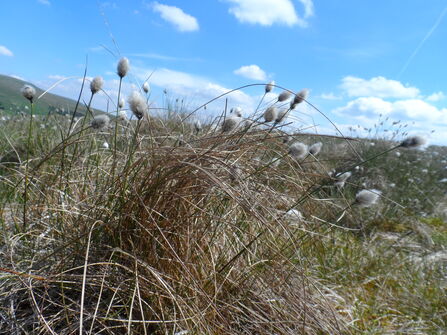
Hare's tail cottongrass © Tessa Levens
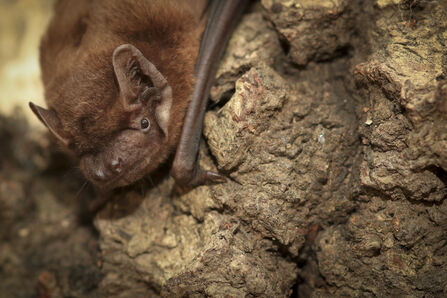
Noctule bat © Tom Marshall
Yorkshire Wildlife Trust's response
What have we done so far?
Yorkshire Wildlife Trust have been actively monitoring and objecting to this development since 2023.
2023 (named Calderdale Windfarm), we responded to the initial EIA scoping report.
June 2025 we responded to the non-statutory public consultation. We wrote to all of the affected Local Planning Authorities detailing our concerns, and asked them to take those into account.
June 2026 We responded to the Preliminary Environmental Information Report (PEIR), produced a summary letter and a 27 page response.
You can read all of those documents at the links below. In addition, you can see the Planning Inspectorate’s response to the EIA scoping report.
- YWT response to EIA scoping report for Calderdale Wind Farm Oct 2023
- YWT response to non-statutory consultation on Calderdale Energy Park Jun 2025
- YWT response to EIA scoping report for Calderdale Energy Park Sep 2025
- Planning Inspectorate, SCOPING OPINION: Proposed Calderdale Energy Park Oct 2025
- Yorkshire Wildlife Trust Position Summary- Calderdale Energy Park (CEP) Jun 2026
- Yorkshire Wildlife Trust Consultation Response: Calderdale Energy Park (CEP) NSIP, Preliminary Environmental Investigation Report (PEIR)
Next steps
We will continue to respond through the planning channels and call for individual renewable energy projects to be located, designed and managed to minimise impacts on nature, protect important habitats and species and benefit people. It’s possible for development to be approached differently and actively contribute to nature’s recovery across Yorkshire.
We work with colleagues in other environmental NGOs who, like us, recognise the need for renewable energy but believe this development is in entirely the wrong place.
We continue to share our evidence and information with elected representatives in the House of Commons, local authorities and parish councils.
What can you do?
Renewables are great, but responsible planning is greater. Help by joining the conversation about the Calderdale Energy Park.
By joining our advocacy mailing list, you’ll receive updates and opportunities to take action for nature across Yorkshire. Together, we can help protect Yorkshire’s wildlife and wild places.
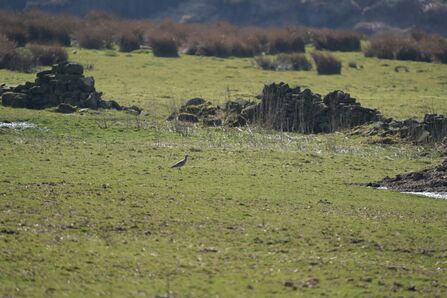
A curlew on its summer breeding territory on Walshaw Moor © Jack Wallington
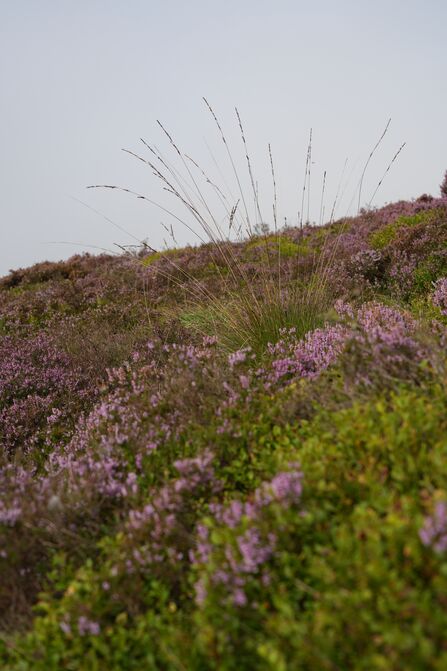
Heather in bloom on Walshaw Moor © Jack Wallington
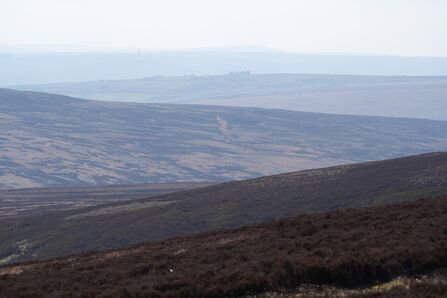
Looking from Walshaw Moor across to Stoodley Pike © Jack Wallington
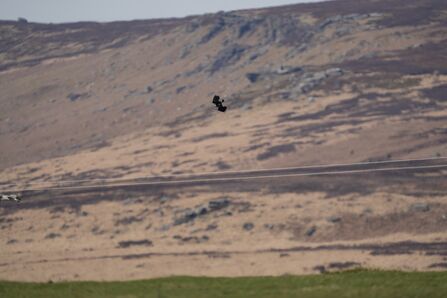
Lapwing over Walshaw Moor © Jack Wallington
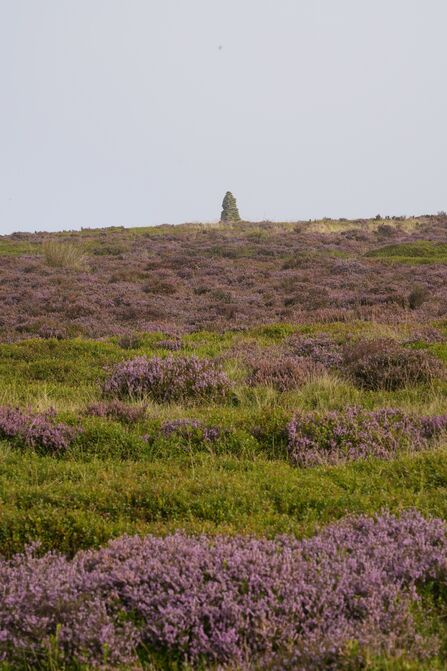
Heather in bloom and a stone cairn on open moorland © Jack Wallington
Explanatory notes
Nationally Significant Infrastructure Project
The scale of this development means it qualifies as a Nationally Significant Infrastructure Project (NSIP). Planning decisions are therefore taken not by the local authority but by the Government, in this case the Secretary of State for Energy Security and Net Zero.
Timescales
The timescales on developments of this size can slip quite frequently. The timeline is based on our understanding as at 3rd December 2025; we aim to update the timeline as it changes.

Statutory consultation
Statutory consultation can confusingly have two meanings:
- A consultation of statutory consultees (including but not limited to Local Planning Authorities, Government agencies, utilities companies), e.g. the 2025 consultation on the EIA scoping report.
- A consultation that must statutorily be held before the process can move forward, e.g. the public consultation running from January to March, 2026.


