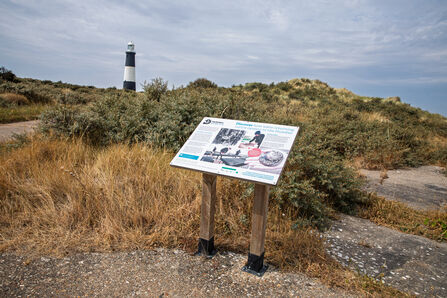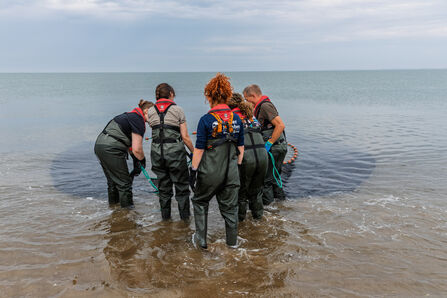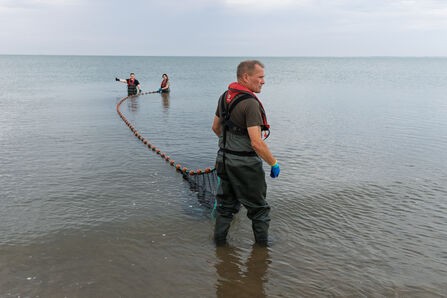

The day began with a briefing from Georgia, Yorkshire Wildlife Trust Marine Restoration Assistant and lead for the day. Safety first - everyone has to wear chest waders and a life jacket. Georgia told us that there could be poisonous jellyfish and lesser weever fish around, so gloves also had to be worn. The Trust's website describes weever fish as grumpy mouthed and venomous, which put me in mind of one or two people I used to work with. This was enough to get them a place on my “to be avoided” list. However, Pat - one of the more experienced volunteers, was slightly dismissive of the hazard they represent, “the sting is no worse than a wasp ” he tried to assure us.
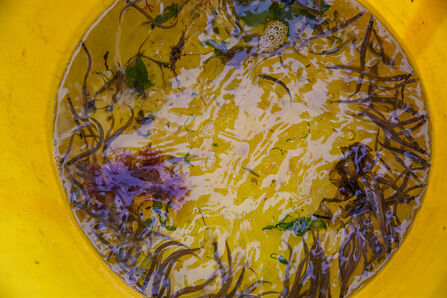
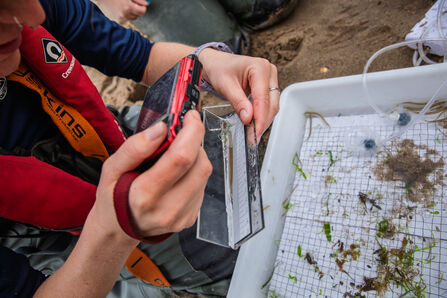
Georgia explained the equipment we’d use, including the long seine net, buckets, sample trays, scoop nets, measuring gauges, and aerators to keep the fish alive during identification and counting. Their health and safe handling are the top priority.
Briefing completed, we walked down the beach to collect the truck carrying all the gear Georgia had listed. Spurn offers many sights such as the foreshore is covered in rocks and pebbles, some with fossils like corals and oysters. Little and Sandwich Terns flew by, their shrill calls ringing over the crashing waves. Butterflies flitted around the bushes and grasses above the beach - they seem to have thrived in this dry summer.
We arrived on site very close to the lighthouse and unloaded everything, then donned our “PPE”. Here’s what the well-dressed fish surveyor is wearing this season, as modelled by Georgia, Jess, Aimee, Sarah, Pat and Clare