
Because of the size of this development, it qualifies as a Nationally Significant Infrastructure Project (NSIP). This means that planning decisions are taken not by the local authority but by the Government, in this case the Secretary of State for Energy Security and Net Zero.
Not Zero

Wind turbines on moorland in the South Pennines © Lyndon Marquis
Calderdale Wind Farm Limited is proposing a 41-turbine windfarm – Calderdale Energy Park – on Walshaw Moor, in Calderdale. The moor is part of the South Pennines SSSI, SPA and SAC, designated for its irreplaceable blanket bog habitat and the rare and fascinating species that call its ancient peatland home.

A curlew on its summer breeding territory on Walshaw Moor © Jack Wallington
Yorkshire Wildlife Trust fully supports the right sustainable energy in the right place to help the country meet its net zero targets. Areas of Walshaw Moor have peat that is 3 metres deep, locking up carbon taken in by plants perhaps 6,000 years ago. As well as being home to amazing wildlife, the peat mitigates climate change and flood risk and preserves millennia of human and environmental history. This is not the right place – there is wind elsewhere.
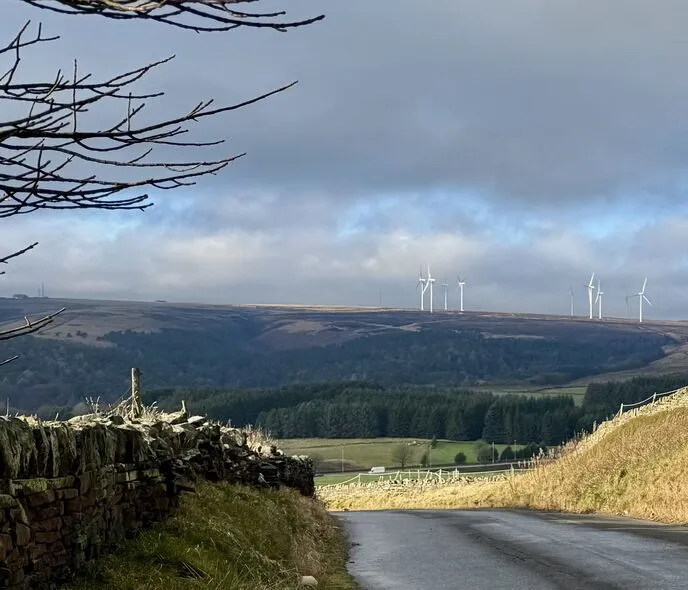
Wind turbines on moorland in the South Pennines © Lyndon Marquis
An important facet of peatland ecosystems is hydrology, the way that water moves and settles within the peat. The bases of 41 turbines, together with the battery station and the tracks required for installation and maintenance of this development will massively disrupt the hydrology of the site. That disruption occurs not just during installation and decommissioning but the entire time the windfarm is running. This will lower the level of the water within the moor relative to the moor’s surface (the water table), drying out millennia of peat.

Sphagnum denticulatum © Dom Hinchley
The layer of plants growing over the peat’s surface protects it from erosion by the weather. When the peatland dries out, that will kill off the plants on its surface, exposing the peat to erosion by wind and rain. This will lead to the formation of deep channels (known as gullies), and steep faces of bare peat (hags), driving the formation of areas of bare peat that lead into a vicious cycle of further erosion. Furthermore, disruption to the moor’s hydrology may lead to contamination of nearby reservoirs and has the potential to aggravate flooding in the settlements below.

Fleet Moss from the air showing the erosion caused by drainage © YPP
As well as damaging habitat for some of Yorkshire’s iconic wildlife, and destroying the historical record preserved therein, this releases millennia of stored carbon back into the atmosphere, negating the purpose of renewable energy.