

Moorlands Nature Reserve
Location
OS Map Reference
SE579587View on What3Words

Know before you go
Dogs
When to visit
Opening times
Open at all timesBest time to visit
March to JuneAbout the reserve
A favourite for families - and bats!
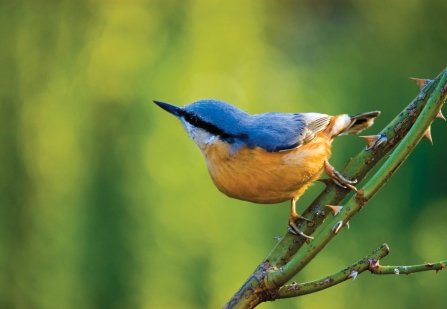
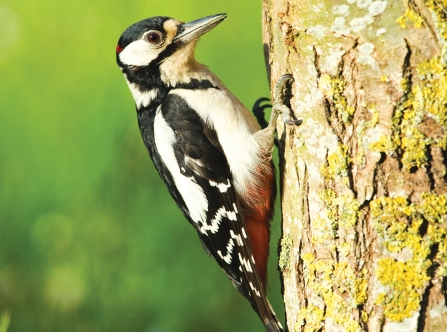
Back in 1955, Moorlands - an Edwardian woodland garden and part of the ancient Forest of Galtres - became our second nature reserve. As well as being one of our oldest reserves, it's one of our best for a family visit, with a nature trail, opportunities for gentle pond-dipping, wooden sculptures, and an irresistible tree house, which doubles as a bird hide. Enjoy views of a variety of woodland birds, including great spotted woodpecker, nuthatch and a variety of tits as they visit the feeders.
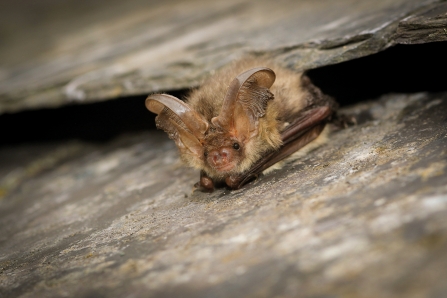
You'll see another type of tree house on your visit - bat boxes! These have been successfully used by common pipistrelle and brown long-eared bats, while soprano pipistrelle, Brandt's and Daubenton's bats have also been recorded here. We also have badgers on site, so please stick to the path to avoid disturbing them.
There's a 1km circuit around the wood on a mostly-flat path, with plenty of benches where you can stop and take it all in.
Tree Time
In autumn, there's a chance of spotting woodcock, and you can find amazing fungi on a stroll through the leaf litter. It's in spring though, when Moorlands is at its finest. Along with the spectacular collection of rhododendrons and azaleas, some of which are very old, large and unusual, there's a succession of flowers right through the season - snowdrops, bluebells, primroses and wood sorrel.
And don't forget to admire the trees. Mature native species grow side to side with the more unusual snakebark maple, magnolias and two dawn redwoods.
Accessibility and facilities
Walking at Moorlands
From the reserve entrance a single footpath accesses the reserve and then splits to form a 1km circuit.
There is a pedestrian kissing gate at the reserve entrance which is accessible to most wheelchairs. There are no other barriers or steps along the reserve access path.
The surface is all compacted earth. There are numerous benches on the reserve and access is over flat and mostly even terrain. Some areas can become waterlogged in winter.
Transport
Parking for 8-10 cars either side of reserve entrance is in a narrow layby beside Moor Lane. Firm surface of compacted gravel by the reserve entrance. The verge opposite is muddy and poorly surfaced.
Facilities
The nearest toilets are at Haxby Shopping Centre two miles away. Pubs, cafes and shops are also in Haxby.
There is good mobile coverage throughout the reserve.
RADAR key access for disabled visitors - Please do not block this gate.

Seasonal highlights
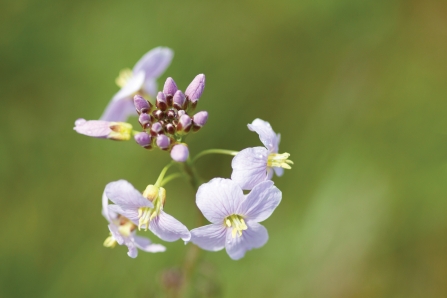
- Spring: Plants - Primrose; Cuckooflower; Marsh marigold; Rododendrons; Azaleas
- Summer: Plants - Woodland ferns; Foxglove; Invertebrates - Common blue damselfly; Speckled wood; Mammals - Brown long-eared bat
- Autumn: Fungi; Plants - Maple; Birds - Nuthatch
- Winter: Birds - Woodcock; Great spotted woodpecker
History
Mr Edward Grosvenor Tew bought Moorlands House and estate in 1909 and planted many of the rhododendrons and azaleas. The estate was then acquired by the Retreat in York for use as a hospital in 1940, before selling 17 acres to become Yorkshire Wildlife Trust's second nature reserve in 1955. Management of the site aims to both preserve the special character of the garden and to encourage native wildlife within the nature reserve.
Directions
Public transport
Buses using the A19 stop in Skelton.
By car
The nature reserve is about 5 and a half miles north of York. From York, take the A19 Thirsk road for about 3 and a half miles to Skelton. Turn right off the A19, continue through the village and the nature reserve is another 2 miles further on, on the left of the road. Parking is allowed on the verge near the entrance gate.
Scattering ashes
We receive many enquiries about scattering ashes on our reserves, and although we are honoured that our sites mean so much to our supporters, we cannot accommodate the burial or dispersal of ashes for ecological reasons. Thank you for your understanding.

Moorlands Woodland View - Howard Roddie
Magic Wildlife Moment
The trees are the stars! Pause a moment to marvel at their age, structure and beauty.

The autumn colours were even more beautiful when the sun came out
Photo Credit - Telling our Story Volunteer, Sara


