

Kiplingcotes Chalk Pit - Jono Leadley
Kiplingcotes Chalk Pit Nature Reserve
Location
OS Map Reference
SE 9142 4347View on What3Words

Know before you go
Dogs
When to visit
Opening times
Open at all timesBest time to visit
March to SeptemberAbout the reserve
Quarried until 1902, Kiplingcotes Chalk Pit must once have been noisy and dusty, but today this lovely spot, nestled in a classic rolling Wolds valley, is calming, charming and home to a plethora of chalk-loving plants.
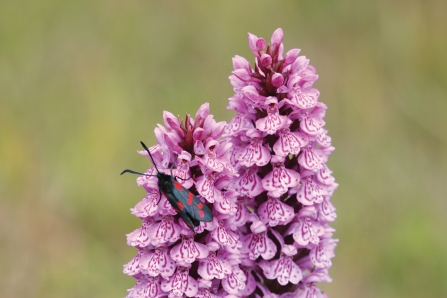
The best time to visit is late spring into early summer, when pyramidal, twayblade and common spotted-orchids bloom and stand to attention, in harmonious contrast to the white of the bedrock. You can find the adder's tongue here too.
Flitting and fluttering its way through the blaze of colour is one of Kiplingcotes' main attractions - the marbled white. Like the glamorous screen legends of Hollywood's golden era, this stunning black and white butterfly is a real star. There's a strong supporting cast too, including dingy skipper, gatekeeper and brimstone.
As vegetation colonises the bare chalk, different wildlife communities spring up as succession takes places over time. The first ‘pioneer’ species of lichens and moss colonise the quarry face and short-tufted grassland develops on the thin soils of the quarry floor supporting wild pansy, wild thyme and mouse-ear hawkweed. More established grassland on the quarry top supports common and greater knapweed, field scabious, harebell and lady's bedstraw and burnet saxifrage.
Ant hills built by yellow meadow ants are scattered across the nature reserve and are characterised by being covered by springy beds of wild thyme – very fragrant when crushed. Some of these ant hills can be decades old and in the wider countryside are only found in areas that are not damaged by ploughing or mechanical cutting.
The nationally scarce red hemp-nettle is found here, as is a large population of basil thyme, which has undergone a huge decline in the UK. Blackcap, bullfinch, and linnet can be found in the scrub, whereas in winter migrant birds pass through feeding on berries.
Surround Sound
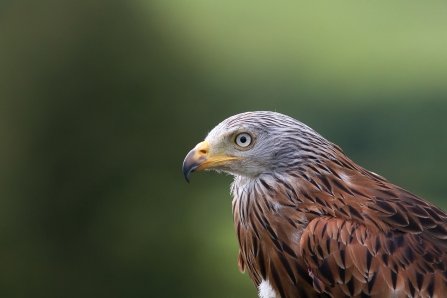
A visit to Kiplingcotes is accompanied by a natural soundtrack that's amplified by the chalk walls - the haunting cries of buzzards and red kites, the yaffling of a green woodpecker, the 'little bit of bread and no cheeeeese' wheeze of the yellowhammer, and the chirping of grasshoppers.
It's a gentle and easy stroll through the reserve, but if you're feeling up to a short, steep climb up to the bank top, you'll be rewarded with glorious views back down the valley towards Market Weighton.
Accessibility and facilities
There are steep steps and uneven terrain at this reserve.
The nearest shops and toilets are in Market Weighton.
There is patchy mobile signal, depending on your provider.
The What3Words code for the car park is eradicate.outboard.mergers.
Habitat
Environmental designation
Seasonal highlights
- Spring: Plants - Cowslip; Invertebrates - Brimstone; Birds- Willow warbler; Yellowhammer
- Summer: Plants - Pyramidal orchid; Common spotted orchid; Common twayblade; Invertebrates - Dingy skipper; Marbled white
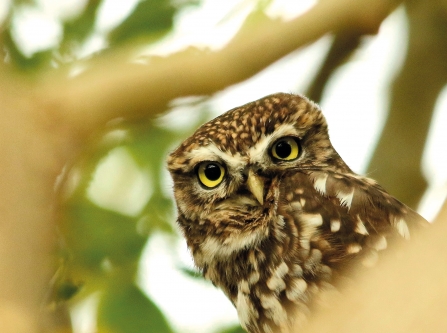
- Autumn: Plants - Autumn gentian; Birds - Fieldfare; Redwing; Little owl
- Winter: Birds - Red kite; Grey partridge; Buzzard
History
Quarried from the 1800s until 1902 the site was used to supply chalk during the building of the embankment of the Beverley to Market Weighton railway line, which opened in 1865.
Nature then took over with grassland flora colonising the site, with small areas of scrub also establishing. The open areas of chalk on the steepest 'scree' slopes are also recognised for their geological importance.
A wide range of formerly more common chalk grassland plant species are present, representing a relict habitat that once covered much of the Wolds landscape.
The Trust has managed the site since 1965. Management has concentrated on keeping the grassland in good condition, with autumn and winter grazing by Hebridean sheep helping keep some of the rough competitive grasses in check, allowing finer grasses and flowering plants to thrive. Scrub and weed control is carried out and cutting and laying takes place to manage the hedgerow on the northern boundary.
Directions
Public transport
Nearest train station is Beverley, approximately nine miles east. Market Weighton is served by buses from York and Goole via Holme-on-Spalding Moor. The Hudson Way cycle route runs on a disused railway line between Market Weighton and Beverley.
By car
The nature reserve is 2.5 miles north east of Market Weighton. From Market Weighton take the road signposted Kiplingcotes. Use the car park on the old railway line and walk 300m north east along the line – the nature reserve is entered through a kissing gate on your left. There is limited parking on the roadside and access is down some steep steps.
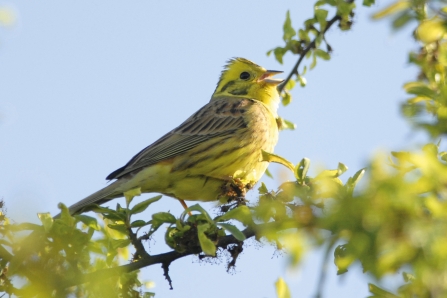
Yellowhammer - Maurice Gordon

The autumn colours were even more beautiful when the sun came out
Photo Credit - Telling our Story Volunteer, Sara


