

Wharram Quarry Nature Reserve
Location
Wharram
OS Map Reference
SE 85836 65364View on What3Words

Know before you go
Dogs
When to visit
Opening times
Open at all timesBest time to visit
June to JulyAbout the reserve
Walk that chalk
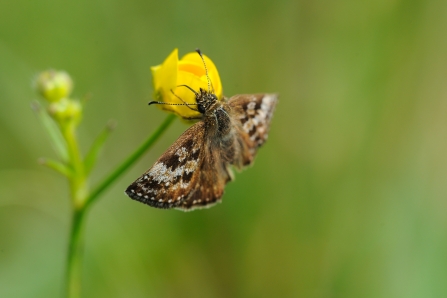
Chalk, quarried here between 1919 and the 1940s, gives this reserve its thin soil and characteristic flowering plants, in turn attracting butterflies including marbled white, dingy skipper and small heath.
The glorious wildflower display includes the yellows of cowslip, rough hawkbit, mouse-ear hawkweed and bird's-foot trefoil; purple wild thyme and clustered bellflower; pink restharrow and blue common milkwort. Look for common spotted, pyramidal and bee orchids in June and July. This is also one of the few Wolds sites for thistle broomrape which parasitizes woolly thistle. The endangered red hemp-nettle has been introduced from nearby populations along with small-flowered buttercup on the quarry face.
The west of the reserve, where spoil was deposited, is now dominated by coarse grasses and hawthorn scrub. Several species of grasses can be found including cock’s-foot, meadow and false oat-grasses, red and sheep’s fescues, and quaking grass. Glaucous sedge is widely distributed.
In order to maintain the succession of plants, areas of the floor have been periodically scraped back to the chalk. To prevent the succession from open flower-rich sward to dense coarse grasses and hawthorn scrub, the quarry floor is grazed with the Trust’s Hebridean sheep in winter and parts are mown in late summer.
Accessibility and facilities
Walking at Wharram Quarry
The ground is level but uneven. The reserve has a grassy and some stony ground and sits in the floor of a large old chalk quarry.
An unmarked and unsurfaced informal permissive footpath of about 850 metres provides a circular loop through the chalk grassland of the reserve and takes about 20 minutes or longer to complete. There are no benches on the reserve.
There is a small kissing gate at the reserve entrance which is not accessible for wheelchairs.
Transport
There is parking for two vehicles on sloping rough gravel at the gate entrance, which is off a quiet country road but situated on a hill near blind corners.
Facilities
There is no mobile coverage on the reserve.
The nearest public toilets and shops are in Malton about 7 miles away.
Habitat
Environmental designation
Seasonal highlights
- Spring: Invertebrates - Dingy Skipper; Plants - Colt's foot; Cowslip
- Summer: Plants - Thistle broomrape; Wooly thistle; Pyramidal orchid; Invertebrates - Marbled white; Small heath
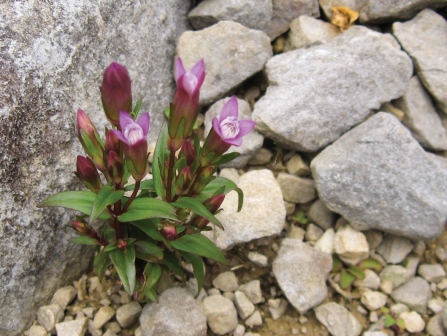
- Autumn: Plants - Autumn gentian; Carline thistle
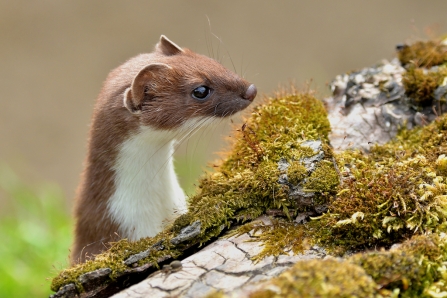
- Winter: Birds - Fieldfare; Redwing; Mammals - Stoat
History
The site was actively quarried for chalk between 1919 and the 1940s and was offered to Yorkshire Wildlife Trust in the 1960s by owner Lord Middleton after he noticed bee orchids growing on the quarry floor.
Directions
Public transport
Nearest train station is in Malton.
By car
At the crossroads on the B1248 in Wharram-le-Street, head west towards Birdsall and the nature reserve is about 0.5 miles on the left as the road descends. Parking is limited and in the gateway.
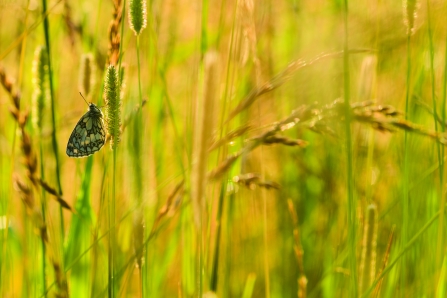
Marbled White - Elliott Neep

The autumn colours were even more beautiful when the sun came out
Photo Credit - Telling our Story Volunteer, Sara


