

Cali Heath Nature Reserve - Maya Baker


Roe deer © Allen Holmes
Cali Heath Nature Reserve
Location
OS Map Reference
SE751496View on What3Words

Know before you go
Dogs
When to visit
Opening times
Open at all timesBest time to visit
March to SeptemberAbout the reserve
An hour with the flowers
At the height of the gold rush in America, when people travelled west to make their fortune, a local trust in Yorkshire granted a patch of land to the poor people of Barmby Moor. As the locals similarly travelled west to find work, the area became known as Cali (or California) Heath.
It doesn't have the palm trees of its sunnier namesake, but who needs palm trees, when you have a collection of native ferns?
Cali Heath is an area of grassy heath - a rare habitat in Yorkshire. Concealed in the grassland is a marvellous array of tiny flowering plants, including bird's-foot trefoil, dove's-foot cranesbill and common stork's-bill - all typical of these sandy soils. Take a magnifying glass for a more detailed view. Look out for hare's-foot clover, named for its fluffy-looking flower heads, and shepherd's cress, recorded in only three other places in Yorkshire.
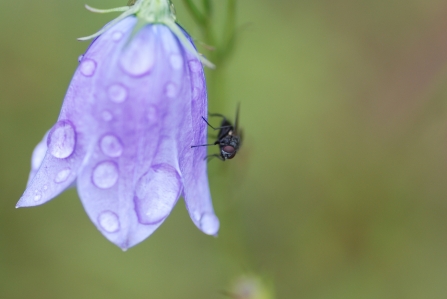
The rough grassland is valuable for a huge number of insects, including over 370 fly species. One of these - Hilara gallica - was thought to be extinct in Britain until it was re-discovered here, and Cali Heath is now a UK stronghold.
Battling bracken
Cali Heath is a diamond in the rough and still a work in progress. As we introduce more grazing, we hope to battle back against encroaching bracken and encourage more wildflowers, and we're re-digging the ponds to create more wet areas.
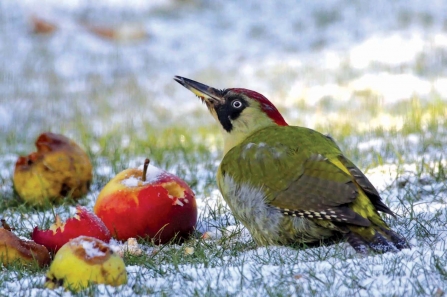
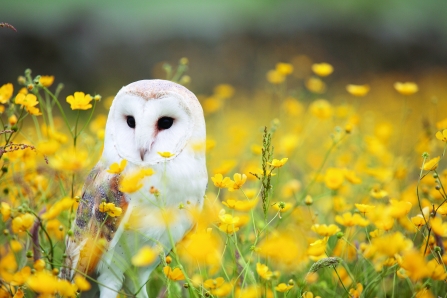
As well as the grassy habitat, there are areas of oak woodland, with alders and willows fringing the ditches, and there's a small section of heather. In quiet moments, you may see roe deer sheltering in the woods. Buzzards are a common sight, look out too for red kite, barn owl or green woodpecker.
Accessibility and facilities
Accessibility
Walking at Cali Heath
The reserve is open grassland with pockets of woodland and bracken. It is fairly level but uneven ground with many rabbit burrows in some areas. Parts can become waterlogged during prolonged wet weather, especially in winter.
An unsurfaced permissive path forms a 1.2km circuit of the reserve taking 30 minutes or more to complete.
There are no benches or hides on the reserve.
There are six small kissing gates along the main permissive path including the first at the reserve entrance. There is a separate small kissing gate where a public footpath enters the reserve from the main road.
A wooden footbridge (small step each end) about one metre wide with handrails crosses a dyke about halfway round the circular route and is accessed by a small kissing gate at each side. There is also a pipe bridge with kissing gates and field gates each side.
Transport
Parking for 1-2 cars on concrete just outside reserve access gate immediately off a very busy main road A1079.
Facilities
There is a small cafe 200m away in direction of Hull. More facilities including public toilets are 3.5 miles away in Pocklington.
There is good mobile signal throughout.
Habitat
Environmental designation
Seasonal highlights
- Spring: Plants - Marsh marigold; Heath bedstraw Birds - Blackcap; Green woodpecker; Willow warbler; Whitethroat
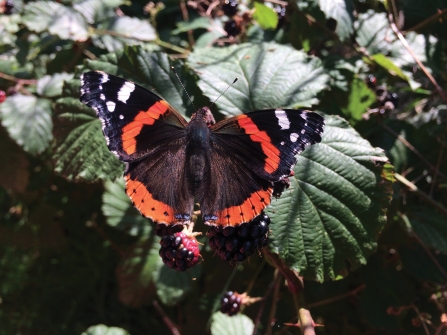
- Summer: Plants - Toadflax; Lady's bedstraw; Musk mallow; Invertebrates - Red admiral; Small copper
- Autumn: Plants -Harebell; Hare's foot clover Birds - Buzzard
- Winter: Birds - Red kite; Barn owl Mammal- Roe Deer
History
When the Trust took on the nature reserve in 2003 parts of the site were agricultural set-aside. Since then work on the site has concentrated on removing invading scrub, bracken and bramble in order to restore the acidic grassland habitat. The two fields which had been previously farmed were re-seeded with a species mix to recreate the natural grasslands. A true success story, as restoration is really working on the site, with one of the seeded grasslands now species rich.
Directions
Public transport
Regular buses run between York and Hull and stop next to the Thai Season Hotel & Restaurant opposite the nature reserve.
By car
On the north side of the A1079 York to Hull Road 9.5 miles east of York centre. Almost opposite the Steer Inn. Please park carefully on the lane behind the pub and cross the A1079 to enter the site.
(c) Andy Chilton

The grasslands provide the perfect habitat for a large variety of wild flowers, including these wild pansies - photo credit - Simon Tull
Magic Wildlife Moment
Discovering wild pansies in patches of bare ground

The autumn colours were even more beautiful when the sun came out
Photo Credit - Telling our Story Volunteer, Sara


